Operations and batches linked to treated parts
Each operation performed receives a unique TT code. This identifies the operation and links process data to the treated batch and temperature records. At initialization, the operation, TT batch, operator, specified temperatures, duration, process specification and comments can be recorded. Operation information may include the cooling medium, start and end temperatures and transfer time, depending on the process. Batch records link orders and products, melt heats and individual part identifiers, with quantities and weights. Batch contents can be copied from the previous operation, reducing repeated data entry for successive treatments.
Alarms for temperature and time deviations
The application records temperature reading errors and deviations from the temperatures and times defined for the operation. The alarm list supports tracking of situations arising during execution, while management functions allow alarms to be administered and canceled. Alarm history can be analyzed by period and in relation to operators, orders and batches to support nonconformity investigations and the identification of recurring situations.
TT Management: organizing process information
TT Management makes use of the data recorded by TT Monitor and provides functions for managing furnaces, operations, cooling media, users and alarms. Operation definitions allow the names, temperature ranges, time ranges and margins used to monitor the treatment to be managed. Measured values can therefore be analyzed against the requirements established for the operation concerned. Access is authorized according to permission levels. Changes to batch contents after an operation has started are restricted to users with special permissions.
Accessible charts and treatment history
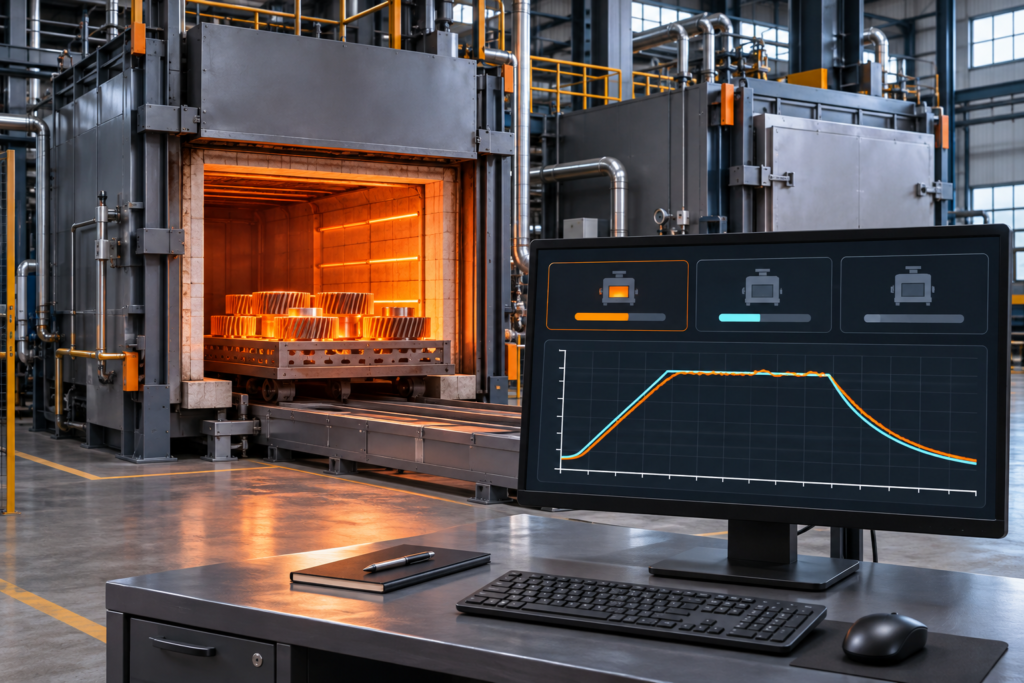
Completed operations can be searched by period, TT batch, melt heat, order, furnace, operator, product, part identifier, cooling medium or comments. Operation details and the temperature chart can be viewed and printed for each record. Changing the chart scale makes it easier to examine areas of interest and compare temperature trends with the limits and specified values available in the record. The history can also be used to quickly verify treatments performed during night shifts. An electronic copy of the original chart can also be attached.
Reports for production and quality
Use lists of TT operations and charts, operation and batch details, alarm statistics and summaries of the weights treated in each furnace. Centralized data supports analysis of furnace operations and documentation of treatments. Additional indicators and any specific reports are defined during the implementation analysis stage.
Connecting with production records
Data exchange with business management and production applications can link orders, products and batches, reducing repetitive data entry and transcription errors. Equipment compatibility, exchanged data and included extensions are defined for the customer’s configuration.
TT Brochure
Download the TT brochure in English (PDF)

 Monitoring and traceability for heat treatments